
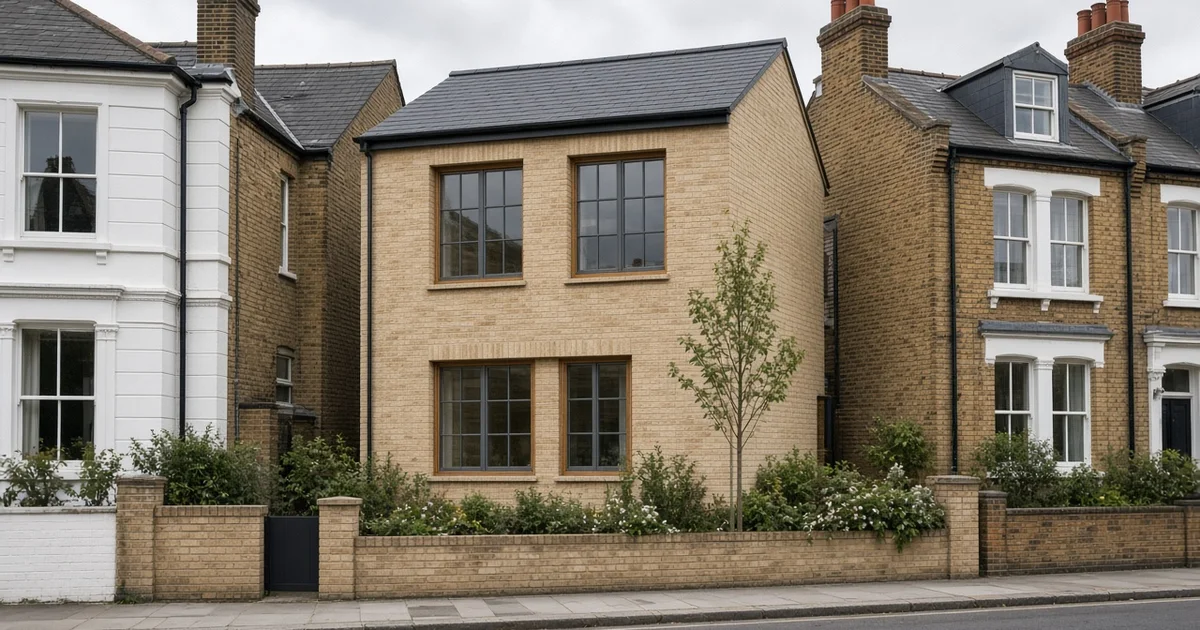
Draft London Small Site Design Code: consultation closes 4 December 2026
The Greater London Authority is consulting on a draft London Small Site Design Code, and the deadline for comments is Friday 4 December 2026. The consultation opened on 11 September 2026. For anyone planning new build homes in London on a modest plot, such as a gap between houses, a corner site or land behind an existing street, this is one of the most important pieces of draft planning guidance of the year.
The Code covers residential development on small sites, defined as sites under 0.25 hectares. It has been prepared alongside the draft London Plan 2026 and will become London Plan Guidance once it is finalised.
What the draft Code would change
The key idea is certainty. The draft Code sets out a London-wide framework with measurable design parameters for a set of typical small site types. It supports draft London Plan Policy MBUL2, under which schemes that comply with the Code should be considered acceptable in principle in design terms by local planning authorities.
- One consistent baseline for small housing schemes across all London boroughs.
- Clear, measurable design rules intended to reduce debate over what counts as acceptable design.
- Boroughs can still issue their own local small site codes to reflect local character.
- Schemes outside the Code are not ruled out; they simply do not benefit from the in-principle presumption.
It should not be confused with the earlier Small Site Design Code guidance published in 2023, which was written to help boroughs prepare their own local codes. The new document is aimed directly at applicants and decision-makers.
What it means for small new build and infill projects
A presumption in favour of compliant designs would not replace a planning application, and other matters such as neighbour amenity, heritage, trees, access and technical standards would still be assessed. However, knowing the design parameters at the outset should make early feasibility work far more predictable. Owners and small developers would be able to test a site against the Code before spending heavily on drawings, which is exactly when good design and planning advice saves the most time.
The Code sits alongside other London moves towards clearer design rules. The London Assembly has separately asked for a rooftop extension pattern book for upward extensions, and many householder decisions are now taken by officers, as covered in our note on planning permission in London.
Design rules are only half the picture
Passing a design code does not make a building buildable. Small sites in London are often tight, with limited access for plant and deliveries, party walls on several sides and existing drainage or services crossing the land. New homes also have to meet the energy and ventilation rules in force when work starts, and the Future Homes Standard from 24 March 2027 will raise that bar further. Planning the heating, ventilation and electrical strategy early through proper MEP design helps avoid redesign after consent.
What to do now
- If you own or are buying a small site, read the draft Code and check which site type your plot is closest to.
- Respond to the consultation before 4 December 2026 if the parameters would affect your plans.
- Keep in mind that the final version is expected only once the new London Plan has been adopted, so the current London Plan and borough policies still apply in the meantime.
- Commission a feasibility study that tests design, structure and building services together rather than one after another.
Our team designs and builds small new build and infill homes from feasibility to handover. If you would like to discuss a site, request a quote.
This article is general information, not legal advice.