
Design & build · Renovation · Engineering · New build — London & Greater London020 4577 0818from the UK+44 20 4577 0818from abroad
Electrical · Solar PV, batteries & inverters

Solar panel installation in London: PV, batteries & inverters

Design and turnkey installation of solar panels, home battery storage and inverters for houses and flats across London and Greater London. We survey, design, specify the right equipment, install, commission and hand over.

020 4577 0818Calling from the UK
+44 20 4577 0818Calling from outside the UK
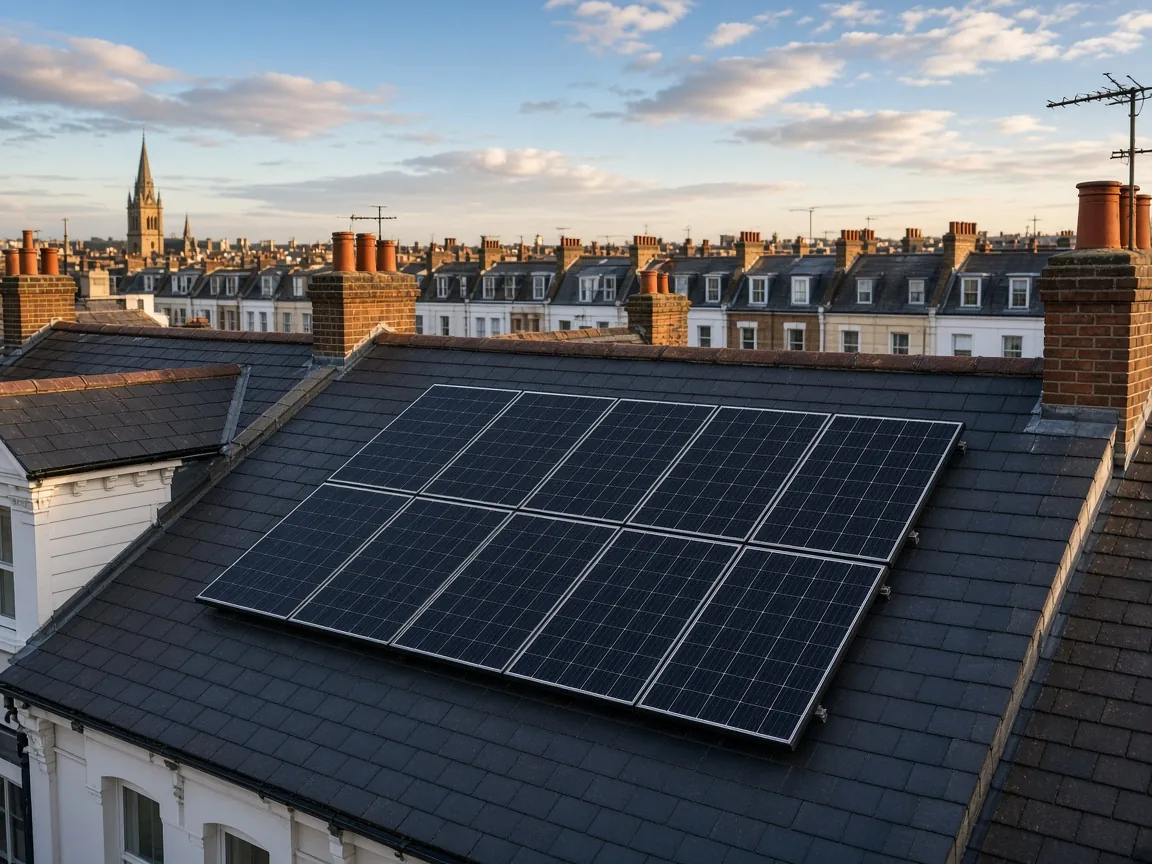
Solar PV panels installed on the roof of a Victorian terraced house in London
Services

Solar PV, battery storage and inverters from one team

Whether you want a new rooftop system, a battery for existing panels or a worn-out inverter replaced, the work is surveyed, designed and installed by the same team that handles your electrical installation.

Solar PV design & installation

Complete solar PV systems for houses, extensions and flat roofs: designed around your roof and electricity use, installed by our team and commissioned and handed over with full documentation.

  • Roof survey covering orientation, pitch, shading and condition
  • Panel layout and electrical design to suit your property
  • Mounting for slate, tile and flat roofs, including extensions
  • Scaffolding, electrical connection and network operator notification
  • Testing, commissioning and handover pack
Get a free quote

Home battery storage

Store surplus solar electricity for the evening, or add a battery to panels you already have. Batteries can also be installed on their own and charged from the grid on a time-of-use tariff.

  • Sizing from your evening and overnight demand
  • Retrofit to existing solar PV or new combined systems
  • Safe location in a utility room, garage or loft
  • Compatible with time-of-use and smart tariffs
Get a free quote

Inverters & inverter replacement

The inverter turns the DC electricity from your panels into AC for your home, and it is usually the first part to need replacing. We replace failed or ageing inverters and specify the right one for new systems.

  • Inverter replacement on older solar systems
  • Hybrid inverters for systems with a battery
  • Optimisers or micro-inverters for partly shaded roofs
  • Monitoring so faults are spotted early
Get a free quote

Survey, system design & performance estimates

A good solar system starts with a proper survey rather than a satellite guess. We measure the roof, assess shading and your electricity use, and design a layout with a performance estimate based on stated assumptions.

  • On-site roof and electrical survey
  • Layout drawings for you or your freeholder
  • Planning and conservation area checks
  • Clear written specification before you commit
Get a free quote

EV charging & smart energy

Where it suits your home, solar PV can be paired with an EV charger and smart controls so more of the electricity you generate is used on site.

  • EV charger installation alongside solar
  • Smart controls and a diverter for hot water
  • Consumer unit upgrades when needed
Electrical services

Monitoring, maintenance & aftercare

Solar PV needs little attention, but it should be monitored. We show you how to read the monitoring and the inverter fault signals, and can inspect the system when you need it.

  • Handover walkthrough and written maintenance notes
  • Monitoring set-up on your home Wi-Fi
  • Inspection, clean and repair when needed
  • Tree trimming advice and shading checks
Get a free quote
London roofs

Designing solar for London homes

Terraces, mansards, extensions and flats all behave differently. These are the points that decide what is possible on your roof.

OrientationSouth-facing is ideal; east or west facing roofs typically generate around 15 to 20% less, and north-facing roofs are not recommended.
ShadingNeighbouring buildings, trees and chimneys reduce output. Optimisers can limit the impact on a partly shaded roof.
Roof structureThe roof covering and structure are checked, and a tired roof may be best renewed while the scaffold is up.
AccessScaffolding on London streets often needs a licence for the pavement and sometimes a parking bay suspension.
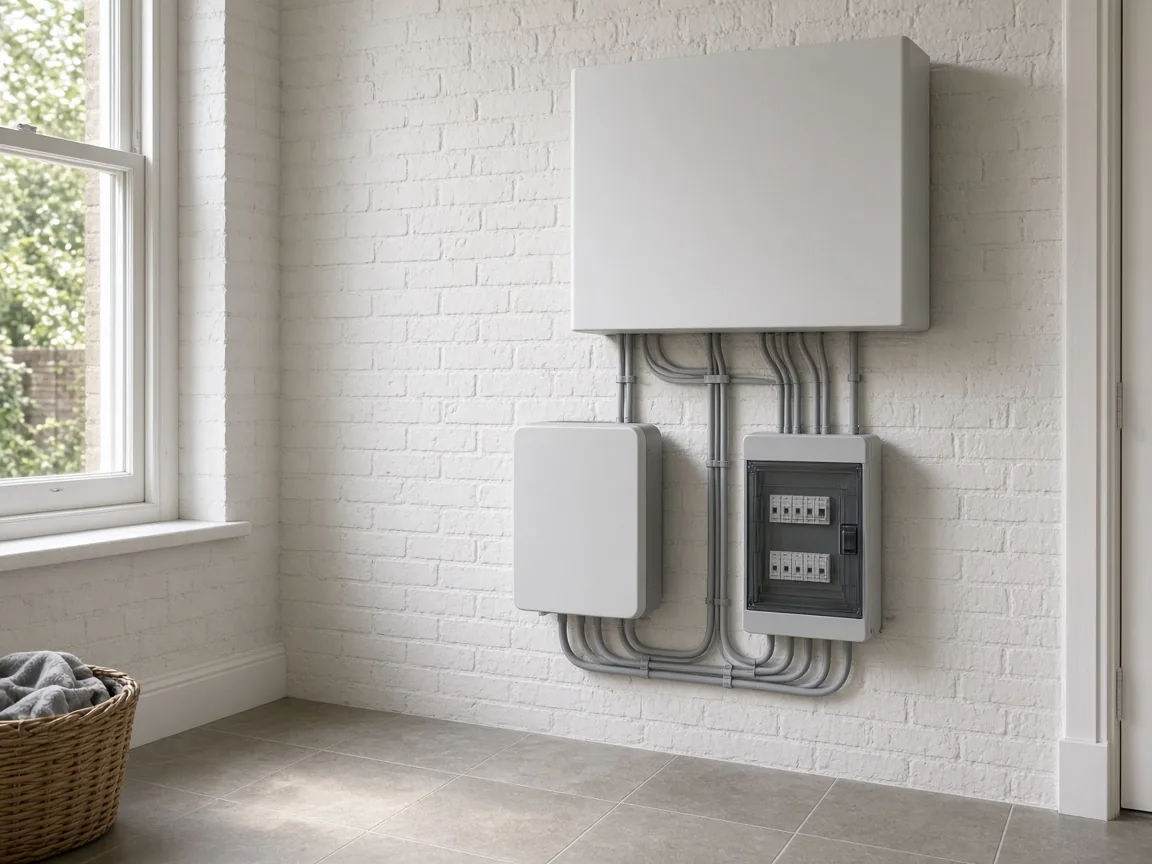
Home battery storage unit, solar inverter and consumer unit installed on a utility room wall in a London home
Battery storage

Home battery storage that fits how you live

A battery stores solar electricity that would otherwise go unused and releases it in the evening. It can also be installed without solar, charged from the grid on cheaper time-of-use tariffs.

We position the battery and inverter where they are safe, accessible and tidy, and route cables so that the finished installation looks right in your home.

Sized to your useBased on evening and overnight demand, not guesswork.
Retrofit readyAdded to existing panels or installed with a new system.
Neatly installedCable routes, trunking and labelling done properly.
Explained at handoverYou see how it works and how to read the app.
How it works

From survey to handover

  1. Survey & design

    We survey the roof and electrical supply, check planning and ownership constraints, and design the system.

  2. Specification & quote

    A written equipment specification, itemised quote and programme, with no pressure to commit.

  3. Turnkey installation & commissioning

    We handle the whole job: scaffolding, equipment, mounting, wiring, network operator paperwork, testing and commissioning.

  4. Handover & aftercare

    A walkthrough, documentation, monitoring set-up and support if anything needs attention.

Costs

What affects the cost of solar panels in London?

We price from a survey rather than a guess. These are the factors that move a solar quote, and indicative published figures for orientation.

System size

  • Number of panels and kWp
  • Roof area and layout
  • How much electricity you use

Roof & access

  • Pitched, flat or mixed roofs
  • Scaffolding and any pavement licence
  • Roof repairs or renewal first

Battery & inverter

  • Battery capacity
  • Hybrid or standard inverter
  • Optimisers for shaded roofs

Extras & paperwork

  • EV charger or smart controls
  • Network operator paperwork
  • Monitoring and handover documentation

Indicative figures from published UK guidance: an average home system of about 4.5 kWp costs around £7,600 installed, and battery storage tends to cost around £5,000 to £8,000. These are national typical figures, not a quote. Your price depends on your roof, access and specification, and we confirm it in an itemised written quote after the survey.

Savings

How solar panels save money

Savings depend on how much solar electricity you use yourself and where you live. We show our assumptions rather than quoting big numbers.

Using your own solar power

Every unit you generate and use in the home is a unit you do not import. How much you use yourself depends on when you are at home, your appliances and whether you have a battery.

  • Run washing, dishwashing and hot water in daylight hours
  • Home working increases daytime use
  • A battery moves surplus into the evening
Get a free quote

Sizing the system to your use

The biggest system that fits on the roof is not always the best one. We match the size of the array, and of any battery, to how and when your household uses electricity.

  • Review of your electricity bills and daily pattern
  • Allowance for an EV charger or heat pump later
  • Performance estimate with stated assumptions
Get a free quote

Batteries and time-of-use tariffs

With a battery and a time-of-use tariff you can store solar and cheaper off-peak electricity and use it when the grid price is higher.

  • Charge from solar or from off-peak grid power
  • Use stored energy at peak times
  • Tariff choice should be checked against your household pattern
Get a free quote
Planning & regulations

Planning permission and Building Regulations for solar panels in London

Rules differ for houses, flats, conservation areas and listed buildings. This is a summary for England; we check the position for your property before design.

Houses: roof-mounted systems

In England, solar panels on the roof of a house are generally permitted development, so a planning application is not usually needed, provided the limits are met.

  • Panels or collectors may not protrude more than 0.2 m beyond the roof slope
  • They may not rise above the highest part of the roof (chimneys excluded)
  • On a flat roof the limit is 0.6 m above the highest part of the roof
  • Equipment should be sited to minimise its effect on the appearance of the building and the area
Get a free quote

Conservation areas & listed buildings

London has many conservation areas and listed buildings, and these are where the rules tighten.

  • Conservation area or World Heritage Site: no panels on a wall, balcony or roof enclosure that fronts a highway, although the roof itself is generally still permitted
  • Listed building: permitted development does not apply and listed building consent is needed
  • Article 4 directions and planning conditions can remove permitted development rights, so we check your property before design
Get a free quote

Flats, maisonettes & leasehold

Rules for a block of flats are set out separately in the planning legislation and follow similar limits.

  • Leaseholders normally need the freeholder’s consent, because the roof usually belongs to the building owner
  • Listed blocks of flats are excluded from permitted development
  • Shared roofs, access and electrical supply arrangements are agreed before design is finalised
Get a free quote

Building Regulations & grid connection

New electrical work must comply with Part P, the roof must be able to carry the added load (Part A) and the installation must meet the energy efficiency requirements of Part L. For solar PV the local network operator also has to be told or asked.

  • Systems up to 16 A per phase (3.68 kW on a single-phase supply) are notified to the network operator within 28 days of commissioning
  • Larger systems need the network operator’s approval before connection
  • We prepare and submit the paperwork and give you the certificates at handover
Get a free quote
Typical scenarios

Typical solar projects in London

These are typical situations we plan for, not named client projects.

Victorian or Edwardian terrace

The rear roof slope or outrigger often decides the size of system. A butterfly or valley roof behind a front parapet can limit the number of panels, and a pavement scaffold usually needs a licence from the borough.

  • Roof condition checked before panels are fitted
  • Layout kept off the front elevation in a conservation area
Get a free quote

Extension with a flat roof

Panels on a tilted frame, weighted or fixed, can sit well on a flat extension roof, provided the roof can take the load, stays watertight and the frame stays within the height limit.

  • Structure and waterproofing reviewed first
  • Cable route planned with the extension build
Get a free quote

Ageing system with a failing inverter

Where an older solar system has an inverter at the end of its life, replacing it can be an opportunity to add monitoring or a battery.

  • Existing array and wiring tested
  • Battery retrofit options explained
Get a free quote

Flat in a block

Roof access, freeholder consent and the electrical supply need agreeing first. Where a system is not realistic we will say so after the survey.

  • Drawings for the freeholder
  • Shared roof and cable routes agreed in advance
Get a free quote
FAQ

Solar panel installation in London: FAQs

How much does solar panel installation cost in London?

Published UK guidance puts an average home system of about 4.5 kWp, roughly 12 panels, at around £7,600 installed, and home battery storage at around £5,000 to £8,000 on top. These are national typical figures for orientation, not a quote. In London the price is mostly driven by roof type and access, scaffolding (which often needs a licence for the pavement) and whether any roof repairs are needed first. We price every project from a survey with an itemised written quote.

Do I need planning permission for solar panels in London?

For most houses in England, roof-mounted solar panels are permitted development and do not need a planning application, provided they stay within the limits: no more than 0.2 m beyond the roof slope, no higher than the highest part of the roof, and no more than 0.6 m above a flat roof. Listed buildings, some conservation areas, flats and properties covered by an Article 4 direction or a planning condition need extra checks. We confirm the position for your property before we design the system.

Can I have solar panels in a conservation area or on a listed building?

In a conservation area the roof is generally still permitted development, but panels cannot go on a wall, balcony or roof enclosure that fronts a highway without planning permission. A listed building has no permitted development right for solar panels, so listed building consent is needed, and consent is not guaranteed. A discreet layout on a rear or side slope often gives the best chance.

Can I fit solar panels on a flat or a leasehold property?

Often yes, but it is more involved. The roof normally belongs to the freeholder, so you will need their consent and possibly a licence for alterations under your lease. Shared roofs, cable routes to your meter and the electrical supply all need to be agreed in advance. We can survey the roof, prepare a layout and drawings for the freeholder, and advise whether a system is realistic.

Is a home battery worth it?

It depends on how much of your solar electricity you already use. Without a battery, surplus generated while you are out cannot be used in the evening; with one, it can be stored and used when you need it. A battery also adds several thousand pounds, so it should be judged on its own payback. We size the battery from your actual evening and overnight use, and can leave a system battery-ready if you want to add one later.

How long does a solar installation take?

Once scaffolding is in place, fitting a typical home roof system usually takes a few days on site, with the electrical connection, testing and commissioning at the end. Surveys, design, any planning checks and network operator paperwork happen beforehand. We give you a written programme with the quote.

How long do solar panels and inverters last?

Solar panels should last 25 years or more. The inverter is the component that usually wears out first and often needs replacing after around 12 years. Inverter warranties commonly start at five years and can often be extended. That is why inverter replacement and monitoring are part of what we offer.

Can you replace my old inverter or add a battery to existing panels?

Yes. We can inspect an existing system, replace a failed or ageing inverter, and add a battery by retrofit. Whether the battery connects on the DC or AC side depends on the existing inverter, and we will explain the options and what each involves in the survey.

Do solar panels work in London weather?

Yes. Solar panels do not need direct sunlight to generate electricity; they produce less on cloudy days and more in strong sun. Orientation and shading matter most: an unshaded south-facing roof is ideal, while east or west facing roofs generate roughly 15 to 20% less. We assess your roof and shading in the survey.