
A confirmed start date for the new standards
The Building Regulations changes that put the Future Homes and Buildings Standards into law in England come into force on 24 March 2027. Higher-risk building work follows on 24 September 2027. For anyone planning new build homes in London, this sets the technical benchmark for projects that start on site from next spring.
What the standards require for new homes
The package updates Part L, which covers energy and carbon, and related guidance on ventilation. In practice, new dwellings will need:
- higher levels of energy efficiency in the building fabric;
- low carbon heating, in most cases a heat pump rather than a gas boiler;
- improved ventilation and overheating considerations;
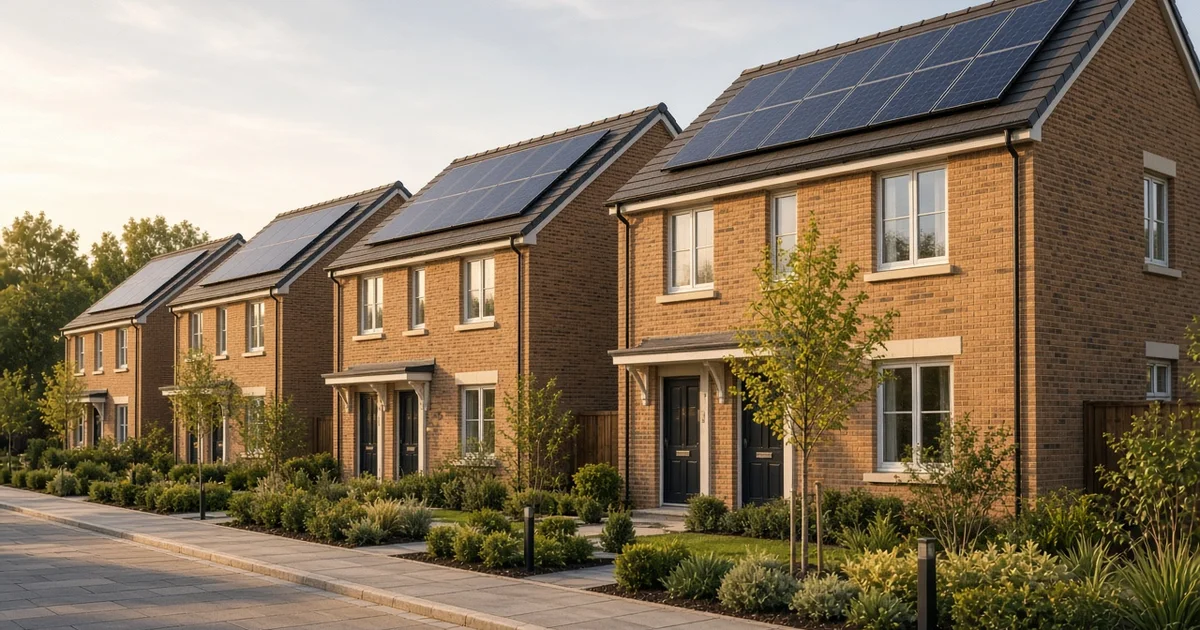
- on-site renewable electricity generation, which in most homes means solar panels.
This changes how a house is designed from the first sketch. Roof orientation, space for a hot water cylinder, a larger electrical supply and the route for ventilation ducts all need to be planned into the technical design and Building Regulations package rather than added later.
Transitional rules
Work is not caught by the new rules where a building notice, initial notice or full plans application was submitted to the building control body before 24 March 2027, provided the work starts on the relevant building before 24 March 2028. The dates alone do not decide which requirements apply to a particular project, so confirm the position with your building control body.
In October, the government also legislated to let building control authorities relax certain carbon emission requirements in exceptional circumstances. It is not a general concession, and applications are assessed individually. The government expects the vast majority of new buildings to comply in full.
New dwellings and the Building Safety Levy
From 1 October 2026 the Building Safety Levy applies to certain building control applications that create new residential dwellings. Government guidance says applications solely for extensions or improvements to existing homes, which do not create a new dwelling, do not need to provide levy information. If your scheme involves a new home or a change of use, check the rules before you plan the budget.
What it means for renovation clients
Existing homes are not required to meet the new-dwelling standard just because they are being renovated. But the direction is clear. When you are already opening up walls and floors during a house renovation in London, it is sensible to upgrade insulation, ventilation and the electrical supply so the home is ready for a heat pump or solar panels later. Our electrician and electrical installation service in London covers consumer unit upgrades and the capacity checks that go with them.
A new build involves architecture, structure and engineering on a tight programme, which is why a single contractor for new build construction in London makes sense. To talk through a project, get a free quote.
This article is general information, not legal advice.
For homes of any age, rooftop generation is part of the energy conversation: read about solar panel installation in London, including home battery storage and inverters.