
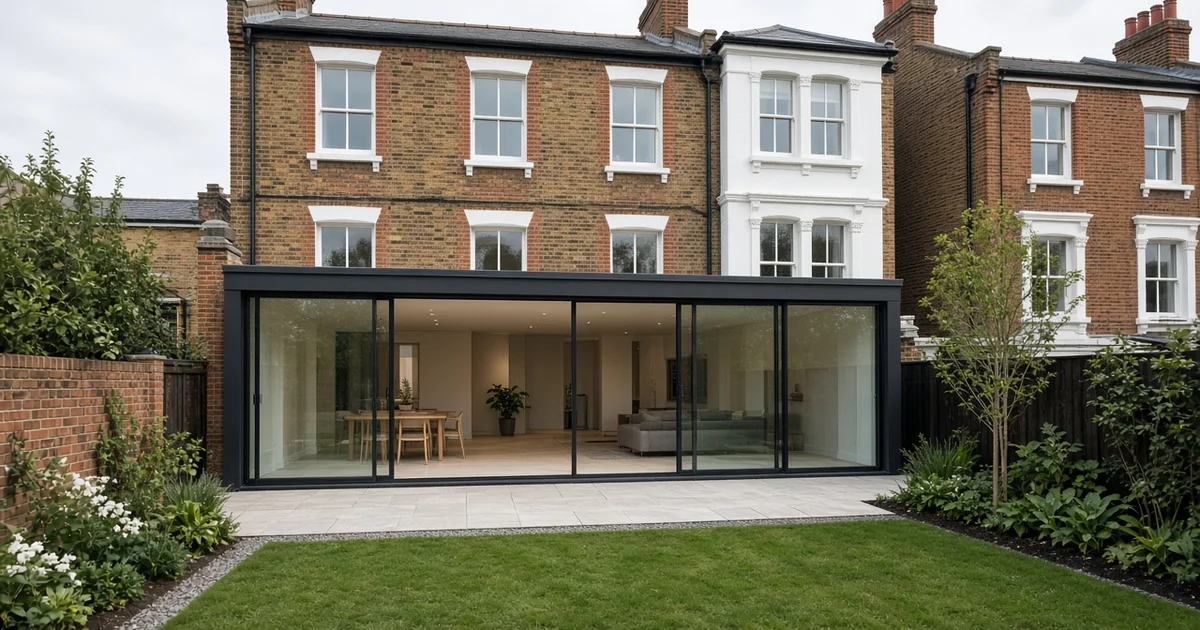
Planning officers now decide householder applications
From 31 October 2026, every local planning authority in England, including the London boroughs, has to follow a single national scheme of delegation. For most homeowners the practical result is simple: an application for a house extension in London or a loft conversion is decided by a planning officer, not by a planning committee.
Householder applications, the category used for extensions, loft conversions and other alterations to a house, sit in the list of applications that must be decided by officers. So do Lawful Development Certificates, prior approval applications under permitted development, applications to discharge conditions and non-material amendments, and small residential schemes of up to nine homes.
What changes for neighbours and councillors
Until now, many councils allowed a ward councillor, or a set number of objections, to send a contentious extension to committee. That route closes. Neighbours can still comment, and comments that raise material planning considerations such as overlooking, loss of light, design, heritage or flood risk are still weighed. The number of objections no longer decides who makes the decision.
Some boroughs are adding informal steps of their own, such as meetings where councillors can pass on residents’ concerns before an officer decides. The final decision still rests with the officer.
What it means for a London extension or loft
For a straightforward loft conversion in London, the change should make the route more predictable. Applications that comply with local policy are less exposed to a last-minute committee call-in, which was a common source of delay. Applications connected to listed building consent, and applications for work already carried out, are treated differently and can still go to committee in exceptional cases.
Permitted development limits for rear extensions and dormer lofts have not changed. Many projects in conservation areas, or on flats and maisonettes, still need a full planning application, so it is worth checking before you commit to a design.
How to prepare your application
- Talk to neighbours early. With no committee stage to fall back on, address likely concerns in your drawings and design statement.
- Design to local policy. Officers decide against the borough’s planning policy and design guidance, so scale, materials and roof form need to fit the street.
- Plan the building work alongside the permission. Planning approval is separate from Building Regulations and from any Party Wall notices.
- Join up the engineering. Structure, heating, electrics and drainage affect layout, so they are best resolved at design stage rather than after approval.
If you are weighing up the options, our guide to loft conversion or house extension in London explains how the two compare, and our house renovation cost guide covers what drives the budget. To discuss a project, get a free quote for your London home.
This article is general information, not legal advice. Check the position for your own address with your borough.